Site tour
The migration-months safari
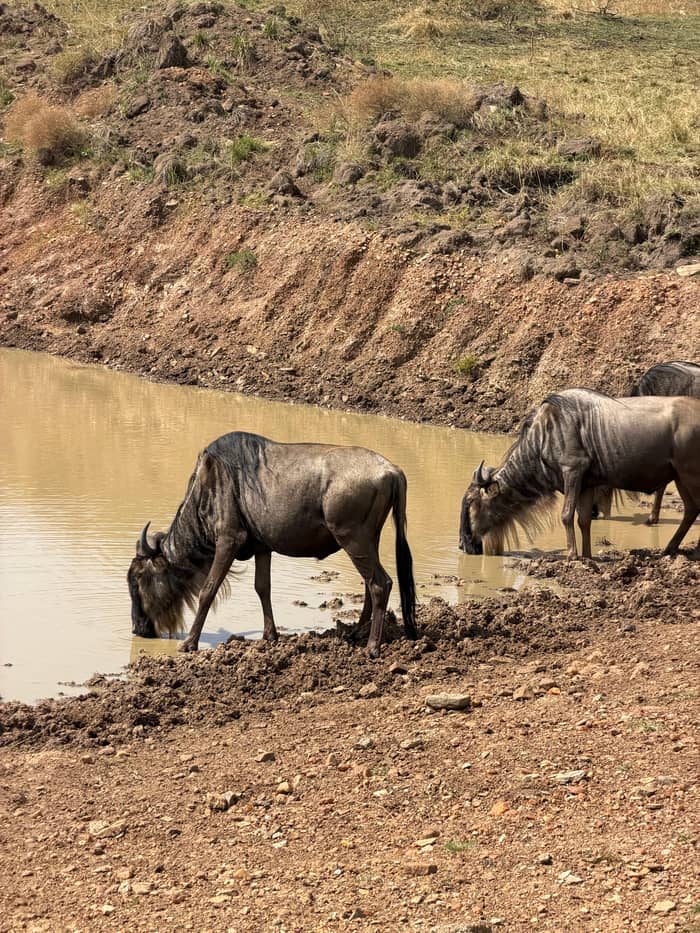
Herds and crossings
- WindowJuly to October1
- Length3 days, 2 nights
- Pricefrom $199
Guides
Language
Currency
Find a date$199 and up · cancel at no chargeHelp with your choice
Two taps to a month
Answer two questions and the matching trip appears with its starting price.
Best choice for you
from $350
A group safari of 4 days that gives the herds more mornings to show up, with Lake Nakuru added.
Best choice for you
from $199
A group safari of 3 days and 2 nights with a night in a tented camp, a good fit for July to October.
Best choice for you
from $228
A group safari of 3 days in a 4WD Landcruiser with a visit to the Mara River.
Best choice for you
from $199
A group safari of 3 days and 2 nights, a sensible length for the drier, clearer months.
When the herds arrive, what the rains do to roads and grass, and what June, December, January and the green months look like, with a season table and a pick-your-month helper.
Editorial team, maasaimaratour.quest · Updated November 24, 2026 · Read in 8 min
Overview
The Mara has no single best month, because it runs on overlapping clocks: the rains, the grass and the migration. Governors Camp, which runs camps inside the reserve, describes the wet season starting with intermittent rain in March,7 April to May as the green season,8 and a lesser rainy season in October, November and December.9 Between them sit drier stretches when roads are firm and animals gather at the remaining water.10,11
The migration lays a different calendar over the weather. Governors says the wildebeest are in the Serengeti from January to June and that the best time to see them in Kenya is July to September, when the herds cross back and forth over the Mara River.12,13 The Mara Conservancy, the body that runs the Mara Triangle, says the migration usually starts in June-July and goes on until November.2 Those are two sources with slightly different edges, and both are worth holding in mind.
What the sources agree on is that timing moves. Governors says rainfall and grazing determine where the animals go,14 and it also says crossings can never be predicted, and on a given day one may simply not occur.15 Plan around a window, never around a date, and choose the month whose other qualities you would enjoy even without a crossing. Treat every month in the table as a tendency rather than a rule, and read the notes beside it for the reasons.
Month by month
| Month | What the sources say | Park-fee band |
|---|---|---|
| January | Generally drier, with shorter grass.5 | Lower band |
| February | Generally drier, a good shoulder month.5,26 | Lower band |
| March | The wet season starts with intermittent rain.7 | Lower band |
| April | Long rains and the green season.6,8 | Lower band |
| May | Long rains, fresh grass, lower camp rates.6,27 | Lower band |
| June | The migration usually begins.2 | Lower band |
| July | Herds in the wider Mara, mornings 11°C to 15°C.1,19 | Higher band |
| August | Best chance of crossings from late July.17 | Higher band |
| September | Migration window, crossings possible.13 | Higher band |
| October | Herds still around, lesser rains begin.1,9 | Higher band |
| November | Short rains, though 22 mm fell in 2025.28,29 | Higher band |
| December | Lesser rains, often dry roads.9,30 | Higher band |
The bands come from one listing that sets park fees lower from January to June and higher from July to December, and the weather notes come from Governors Camp.9
For most travellers who ask about the best time, the answer is the migration. For Governors, migratory wildebeest and zebra normally sit across the wider Mara ecosystem from July to October,1 and it points to late July and August as the likeliest weeks for Mara River crossings.17 It also describes July as one of its driest months, which suits long days out on the plains.18 If your dates fall in that stretch, book early and keep the dates flexible.
The weather in those months is mild rather than hot. Governors recorded daytime highs between 25°C and 28°C in July 2025, with mornings and evenings from 11°C to 15°C,19 and it adds that the coolest months of Kenya's year are July and August, when temperatures can dip beyond 10 degrees.20 That is cold enough for a fleece on an open vehicle at dawn, and it is a reason to pack layers even though the sun is strong by midday.
There is a cost to the window. Governors says July to October is a popular period when well-known crossing points can be busy,21 and the park-fee band on one listing is higher from July to December than from January to June. Another listing sets its fee higher from July to October. If a crossing is the point of your trip, allow several nights, since Governors suggests exactly that for travellers who prioritise one.22
June is a good time to visit the Masai Mara if you want to arrive just before the crowds. The Mara Conservancy says the migration usually starts in June-July,2 so a June safari can catch the first herds without the full pressure of the peak. It is also a month when the Serengeti herds are still on their way north, since Governors places the wildebeest in the Serengeti from January to June.12
The honest caveat is that June is a transition month. The herds may be in Tanzania, at the border or already inside the reserve, depending on the year, and Governors says that in early July 2025 the herds were still massing in the north of the Serengeti, ahead of a move to the Sand River.16 If the herds have not arrived by your dates, the resident lions, elephants and buffalo still make the safari worthwhile.
On price and fees, June falls on the lower side of the one listing that splits its park fee at the start of July. That makes it a sensible compromise for a traveller who wants a chance at the migration without paying the highest fee band. Book a longer stay if you can, as the movement of the herds in a transition month is the least predictable of the year. If you can add a night, do so, since an extra morning gives the herds one more chance to show up where your guide is waiting.
Ways to time it
Site tour
Herds and crossings
Group safari
Calves and quiet
With Lake Nakuru
For crossings
A Masai Mara safari in December sits at the end of the lesser rains. Governors places that rainy season in October, November and December,9 and another of its pages says the short rains happen in November.28 The actual weather varies: Governors recorded only 22 mm in November 2025, far less than it expects,29 and light, intermittent rain through December 2025 left dry roads and clear visibility.30 Total rainfall that December reached 67.5 mm.33
January and February are generally drier, with shorter grass that helps visibility.5 Governors recorded just 33.7 mm of rain in January 2026, its driest January since 2017.25 Yet January 2025 brought 253 mm,24 so a dry-looking month on paper can still turn wet, and the same month in two years can feel like different seasons. The pattern is a reminder that rainfall numbers from one season say little about the next, so use them as colour rather than as a forecast.
Birds are the bonus. Governors says migratory birds are present in the Mara between November and April,32 and it recommends the shoulder season from January to March as a fantastic time for game viewing.26 For a traveller who values calm days, fewer crowds and good light over a river crossing, this stretch is a strong choice.
A year in the Mara
January to June
Governors places the wildebeest in the Serengeti from January to June.12
June to July
The Mara Conservancy says the migration usually starts in June-July.2
Early July
In 2025 the herds were massing in the north of the Serengeti, ahead of the Sand River.16
July to September
Governors names July to September the best time to see crossings of the Mara River.13
October to December
Governors places the lesser rainy season in October, November and December.9
The long rains are the season most readers hesitate over. Governors says the wet season begins with intermittent rain in March and calls April to May the green season,7,8 while its other page says April and May are the long-rains months, with new grass and wetter ground.6 It also says many species give birth during the green season.31 The same pattern explains why the answer to a question about the rainy season depends on whom you ask, and why a traveller should check the dates with the operator.
Rain does arrive in force. Governors recorded 138 mm in the first 12 days of March 2026, and it says classic Mara storms were building from around 4 pm each afternoon.34,35 That is a heavy spell, and soft tracks can slow a vehicle, so travel on a flexible plan and ask your operator how it handles wet roads.
The reward is cost and quiet. Governors sets its camp rates below the migration-season level in April and May,27 and fewer vehicles share each sighting. A green-season safari suits photographers, bird lovers and travellers who prefer an empty horizon to a busy one, and it does not suit anyone for whom a river crossing is the only goal. If you like a quiet safari, bring a camera with a decent lens for the birds and the stormy skies, since birds and stormy skies both feature in these months.
Video
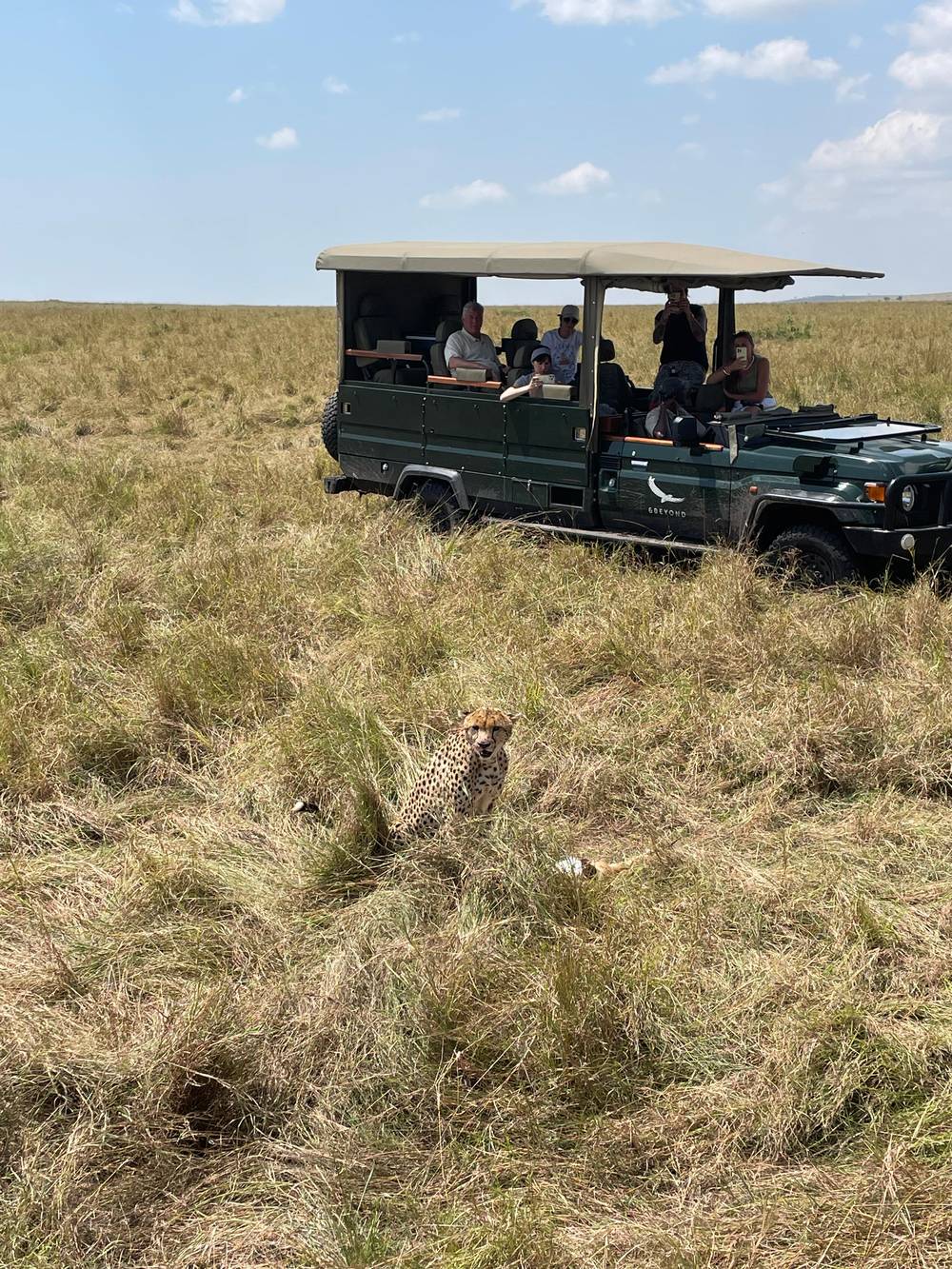
Pangolin Wildlife Photography on YouTube · Nothing is fetched until you hit play.
is between July to September, when the wildebeests are crossing back and forth over the Mara River
Before you pick a month
Packing for the Mara is about layers. A dawn drive can be cold, midday can be hot and a storm can arrive in the afternoon, so carry a fleece, a waterproof jacket and sun protection. The July temperatures Governors recorded, from 11°C in the morning to 28°C by day, show how wide the daily swing can be.19 The details change with the day, so keep the packing flexible and put the warm layer where you can reach it without unpacking everything.
The roads change with the weather. Governors says roads are firm and accessible in the dry season,11 and the wet months can make tracks slow. A group safari in a 4WD jeep is built for this, and the listing for this site's safari describes a 4WD vehicle with a guaranteed daily departure. Tell the operator at booking if you are travelling in the wettest weeks, so it can advise on timing.
Do not let the rain scare you off entirely. Storms that build in the afternoon, as Governors describes for March 2026, make for dramatic skies.35 Whichever month you choose, keep a day of slack in your wider trip, because a flight delay or a slow road is easier to absorb with a margin.
If a river crossing is the priority, aim for late July to August and stay several nights.17,22 If big herds on the plains matter more than the crossing itself, anywhere in the July to October window will do, with the usual crowds.1 If you want to see calves, birds and green scenery, April and May suit you better, with the long rains and lower rates.6,27 Pick the month that matches your top priority and treat the others as a bonus.
If you want a quiet safari with good visibility, look at January and February, when the grass is shorter and the ground generally drier.5 December sits between the two moods, as the lesser rains may or may not arrive.30 None of these windows is a guarantee: the rain falls where it falls, and the herds go where the grass is. The table below puts the months side by side, and the helper turns your priorities into a month.
Finally, think about the length of your stay. A short trip in a transition month is a gamble on the weather, while a longer stay gives the herds and the rain time to cooperate. The 4-day group safari on this site's list starts from $350, and the classic 3-day safari from $199, so the price of an extra day is small compared with the cost of flying all the way to Nairobi.
FAQ
The Mara Conservancy says the migration usually starts in June-July, so June can catch the first herds before the busiest weeks.2
Governors says crossings can never be predicted, and one may not occur on a particular day.15
Sources
Planning a Maasai Mara safari? Ask a real person here.