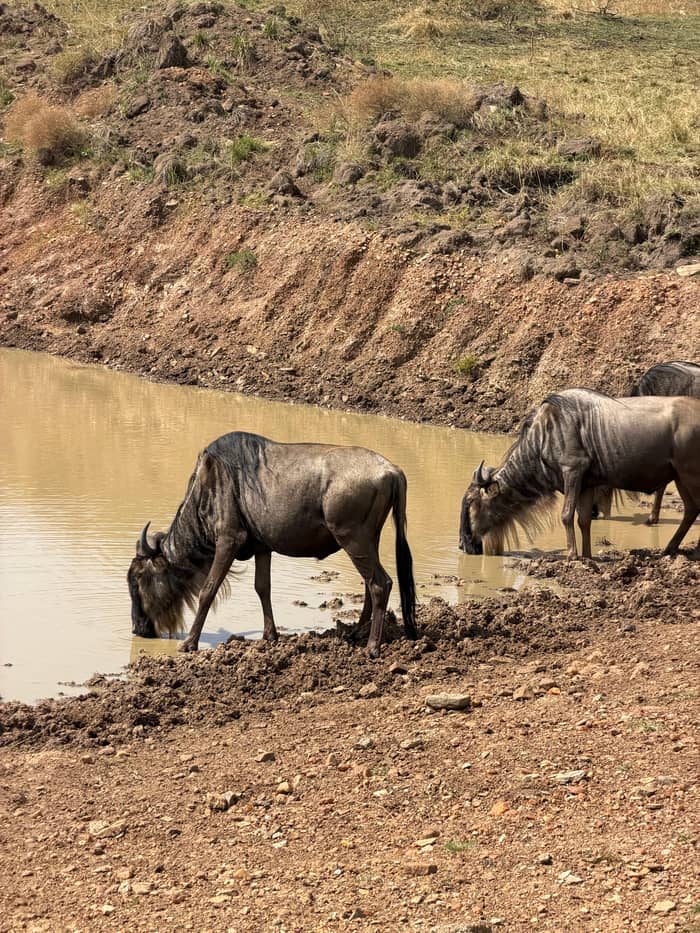
Where most tours enter
The eastern reserve
Narok side, Sekenani Gate
See the safariGuides
Language
Currency
Find a date$199 and up · cancel at no chargeExplore the stops
3-day Maasai Mara safari from Nairobi
★ 4.6 · 530 opinions
In brief
The Maasai Mara National Reserve is run by Narok County and the Mara Triangle managers, and the Triangle alone covers 510 km2, about a third of the whole reserve.
Reserve essentials
Browse 14 stops
Choose a route, then tap a pin or stop for its note and a Google Maps link.
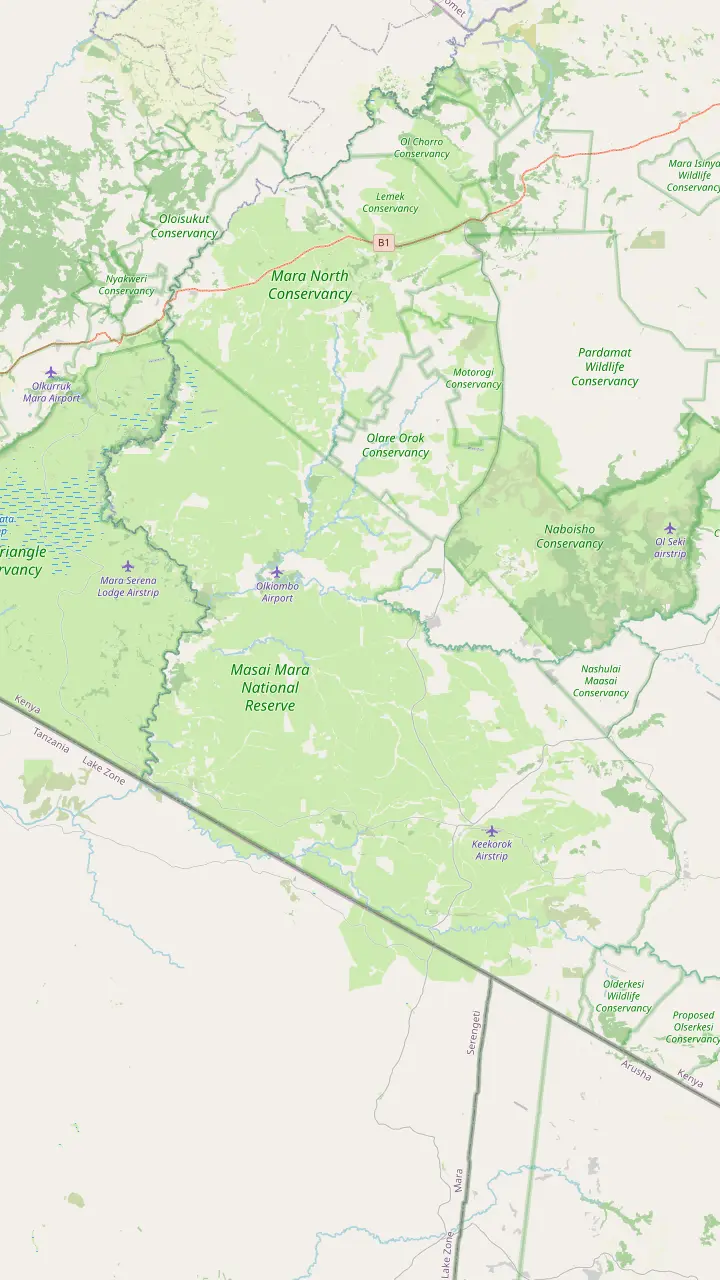
Oloololo gate is on the Mara Triangle side, and the main road from there to Purungat Bridge gate takes a little over 1 hour at 50 km/hr.
Google MapsMara Serena Safari Lodge and Little Governors Camp are the only accommodation inside the Mara Triangle, according to the Mara Conservancy.
Google MapsThe Mara River is one of the boundaries of the Mara Triangle, and the herds are described crossing to Look-Out Hill and down to the river.
Google MapsSekenani is the route the Mara Conservancy calls fastest for a stay at Mara Serena, on the tarmac from Narok.
Google MapsSand River is one of the traditional entry points for the migration herds, which gathered in the northern Serengeti before heading there in early July 2025.
Google Maps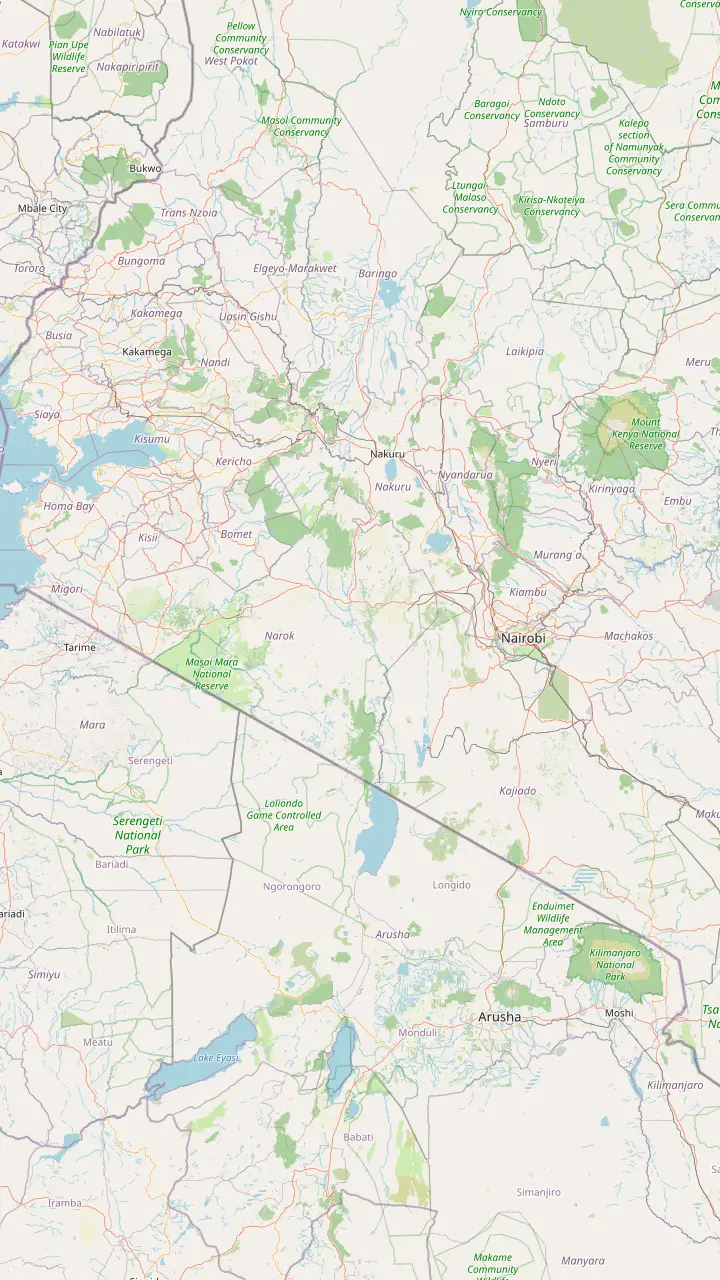
Nairobi is where the listed safaris begin, with free pickup at hotels in the city centre or Westlands, or at the City Market on Muindi Mbingu Street by 7:30 AM.
Google MapsNarok is the last big town on the way, and the Mara Conservancy says the road is tarmacked from Narok to Sekenani gate.
Google MapsSekenani is the route the Mara Conservancy calls fastest for a stay at Mara Serena, on the tarmac from Narok.
Google MapsMara Serena Safari Lodge and Little Governors Camp are the only accommodation inside the Mara Triangle, according to the Mara Conservancy.
Google Maps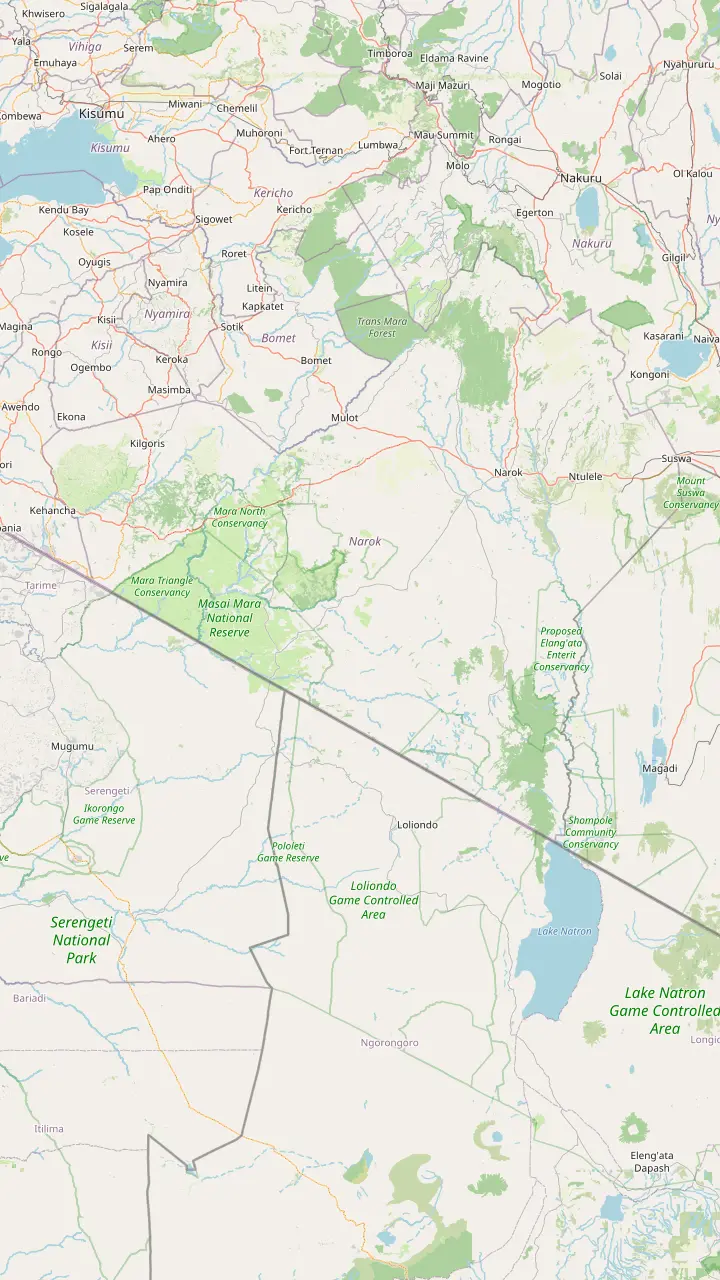
Kogatende lies in the northern Serengeti, where the herds gathered in early July 2025 before moving toward the Sand River.
Google MapsSand River is one of the traditional entry points for the migration herds, which gathered in the northern Serengeti before heading there in early July 2025.
Google MapsThe Mara River is one of the boundaries of the Mara Triangle, and the herds are described crossing to Look-Out Hill and down to the river.
Google MapsOloololo gate is on the Mara Triangle side, and the main road from there to Purungat Bridge gate takes a little over 1 hour at 50 km/hr.
Google MapsThe Loita Hills lie east of the reserve, and Pardamat Conservation Area is described as a migration route from the Loita plains to the Mara Triangle.
Google MapsMapping data © OpenStreetMap contributors
What the reserve is and who runs it, how large the Mara Triangle is, which gate a Nairobi tour uses, what entry costs and how the conservancies next door differ.
Editorial team, maasaimaratour.quest · Updated November 24, 2026 · Read in 7 min
Overview
Is Maasai Mara a national park? Not in the strict sense: its own name is the Maasai Mara National Reserve. The managers of the Mara Triangle explain that in 1994 its management was divided, with the eastern side managed by the Narok County Council and the north-western sector, the Mara Triangle, by the Trans Mara County Council.1 The reserve is therefore run by county authorities.
Those councils later merged. With the new constitution, Narok County Council and Trans Mara County Council became the Narok County Government, which inherited the management agreement with the Mara Conservancy, a not-for-profit company.6 The Conservancy began operating in the Triangle on June 12, 2001, and its agreement was renewed for ten years in 2016.7,6 That makes the Triangle a partnership between a county and a conservation company.
For a visitor the split matters in small ways. The Triangle has its own gates, its own fee table, its own park rules and its own rangers, and it is open every day.8 The eastern side is managed by the county on its own terms. A safari that sleeps in one sector and drives in the other can meet two sets of rules, which is one reason fees deserve a careful read in any listing.
Fees as published
| Visitor | January to June | July to December |
|---|---|---|
| Non-resident adult | $1004 | $2004 |
| Non-resident child, 9 to 17 | $504 | $504 |
| Child up to 8 | Free12 | Free12 |
| Kenyan citizen adult | KES 1,50013 | KES 3,00013 |
| East African resident adult | KES 2,50013 | KES 5,00013 |
Figures as the Mara Triangle publishes them, per person per day, and read from its fee table; look up the current table before you go.4,13
How big is Masai Mara National Park, as people often type it into a search bar? The official sources give one hard figure: the Mara Triangle covers 510 km2, which the Conservancy says is about one-third of the total area of the reserve.2 The whole reserve is therefore several times the Triangle, and a vehicle that is slow on rough tracks cannot cross it casually in a day.
The Triangle has a clear shape. Its edges are the Oloololo Escarpment, the Mara River and the international boundary, which together make the triangle that gives the sector its name.9 None of these boundaries is fenced, because seasonal movement into the dispersal areas around the reserve is crucial for wildlife.10 A reserve with open edges is a reserve where animals come and go, and that is part of what makes a sighting feel unscripted.
Inside those edges the wildlife is thick. According to the Conservancy the Triangle holds one of the world's highest densities of wildlife, and a lucky visitor can tick off every one of the big five without leaving a patch smaller than 2 square kilometers.11 Size alone does not tell you how many animals you will meet. What the 3 days of the safari sold here give you is time to let the reserve work in your favor, rather than a number of kilometers covered.
Road trips from Nairobi commonly reach the reserve through Narok and then the Sekenani gate. The Mara Triangle managers say the road is tarmacked from Narok to Sekenani gate, and that the Sekenani route is the fastest way to Mara Serena.14 They also describe Sekenani Gate as being on the Narok side, the side a drive from Nairobi through Narok comes to.3 Your guide will say which gate the day plan uses.
The Triangle has gates of its own. Tickets can be bought from the collection agency online with a VISA card in Nairobi, or on arrival from an authorized employee at Purungat Bridge, Oloololo Gate or Serena Airstrip.20 The main road between Oloololo Gate and Purungat Bridge Gate takes a little over 1 hour to drive at 50 km/hr.15 Check the map for the gates and the river.
Gate hours matter on a long day. The Mara Triangle opens its gates at 06:00 and closes them at 19:00, with no vehicle allowed in after 18:30.8 Carry your passport rather than only a driver's licence, because the Triangle checks identity when you pay and the licence does not count.21 Keep it in your day bag and not in a hotel safe, since the gate is where it is asked for, and arrive with enough time before the last entry to buy your ticket without rushing the driver.
Which part matters to you
Name your priority and find the part of the reserve to ask about.
If I am entering from Nairobi
Sekenani Gate
If I want to cross the river
The Mara River edge
The river is one of the Triangle's edges.9
If I want fewer vehicles at a sighting
A conservancy
Naboisho monitors how many tourists enter.18
If I care what my fee funds
The Triangle table
A share of 55% goes to the Narok County Government.19
If I am traveling with children
Child rates apply
Areas compared
Where most tours enter
Narok side, Sekenani Gate
See the safari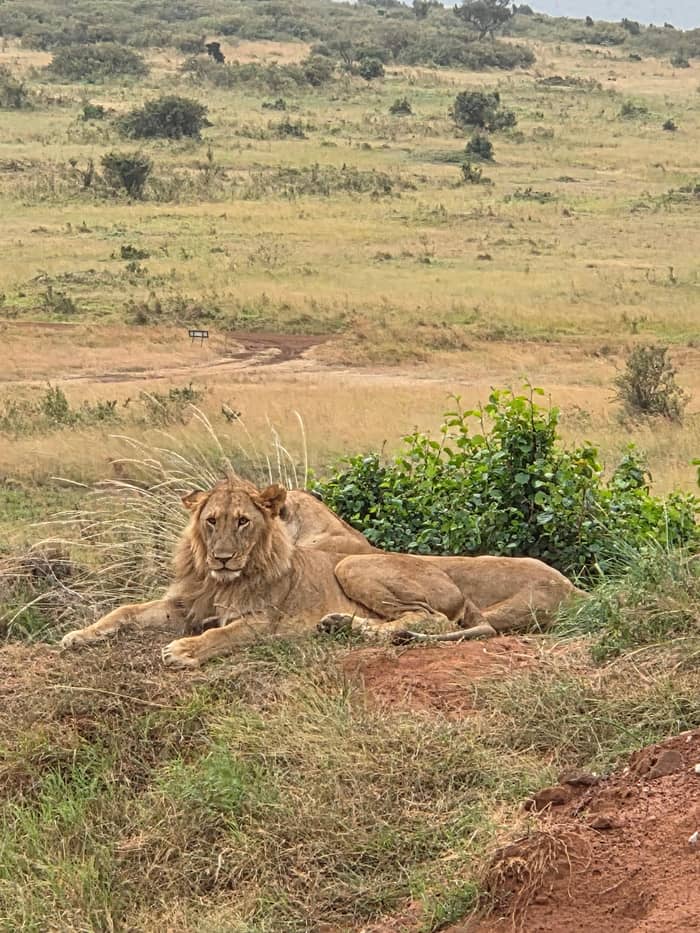
Run by the Conservancy
North-west sector
See the safari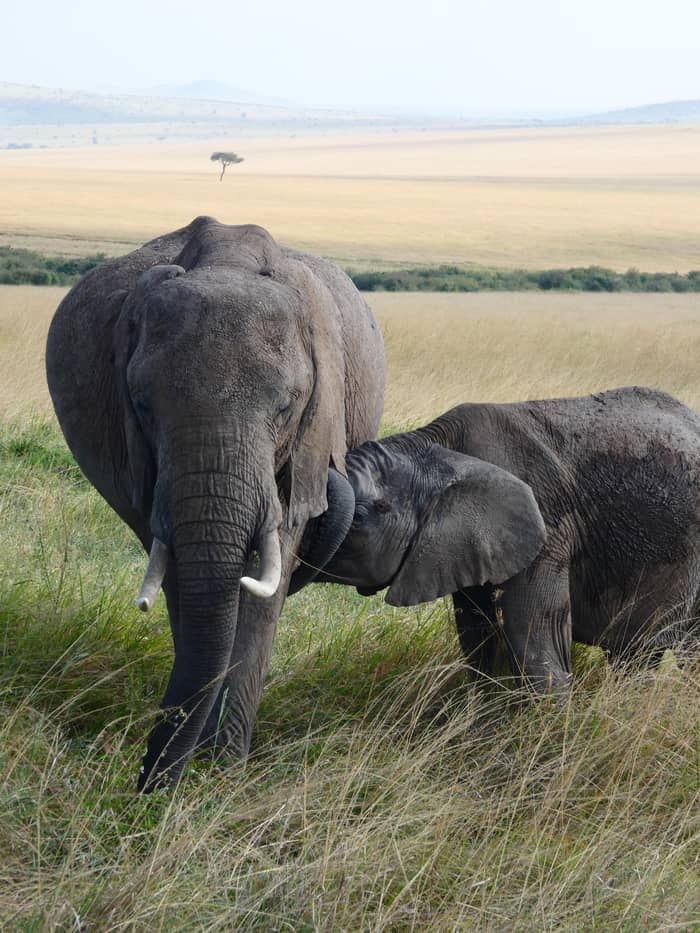
Beside the reserve
Maasai land for wildlife
See the safariIn the fee table of the Triangle a non-resident adult is charged $100 a day up to the end of June and $200 a day from the start of July, children aged 9 to 17 are charged $50 and the youngest children, up to 8, pay nothing.4,12 Kenyan citizens pay KES 1,500 or KES 3,000 as adults depending on the half of the year, and East African residents KES 2,500 or KES 5,000.13 These are the published figures of one sector and the numbers can change, so look up the current table before you go.
The overnight trap is in how a ticket is defined. Tickets in the Triangle last 12 hours and expire at night rather than rolling into the next morning,32 while a vehicle fee also lasts 12 hours and can be used for any number of exits and re-entries.15 The Conservancy also says fees are paid according to where visitors stay, and a visitor sleeping in the Triangle who drives in by the Sekenani Gate should not pay until entering at Purungat Bridge.3
A 3-day tour therefore pays for each day it spends inside. The listing notes put the 2 nights at $200 for each person in the first half of the year and $400 in the second, the same ladder. Whether that is already in your fare is the question to ask. Payment in the Triangle is cashless, by M-Pesa or credit card, so an operator that says cash on the day should say where the card machine is.16 Keep your booking confirmation and the fee receipt together in one place, since a gate official may ask to see either, and a clear record also helps if you need to settle a question with the operator afterwards.
Price your party
Choose your party size to see 3 departures that enter the reserve.
Choose from 3 options
Choose your party size to see 3 departures that enter the reserve.
≈
View≈
View≈
ViewConverted at the ECB reference rate, from-prices as listed by GetYourGuide. The precise amount is shown when you book.
Who ran the reserve
1994
The east goes to Narok County Council, the north-west to Trans Mara County Council.1
2001
The Mara Conservancy began operating in the Mara Triangle on June 12.7
New constitution
They become the Narok County Government.6
2016
A ten-year agreement with the Conservancy is signed again.6
Today
The Mara Triangle is open every day, with gates from 06:00 to 19:00.8
The reserve does not stand alone. A conservancies association lists 24 member conservancies covering about 450,000 acres, and says its members bring together over 15,000 landowners.5,17 These are areas of Maasai land set aside for wildlife and tourism around the edge of the reserve. For a visitor, one difference is how many vehicles share a sighting.
Rules and style differ from one conservancy to the next. Naboisho Conservancy says it strictly monitors the number of tourists who enter, which reduces the number of vehicles.18 Mara North Conservancy is a partnership of 12 tourism partners, 10 permanent camps and 2 riding outfits, with 783 Maasai landowners.33 Olderkesi lies at the south-east corner of the reserve, just north of the Serengeti National Park.34
Conservancies also keep the migration alive. Pardamat Conservation Area serves as a migration route from the Loita plains to the Mara Triangle and then to the reserve.29 The Triangle managers add that the resident Mara wildebeest herds stay in the conservancies just outside the reserve because agriculture has limited their routes.35 When you look at the reserve on a map, picture its edges as a zone of shared land, not a wall.
Video
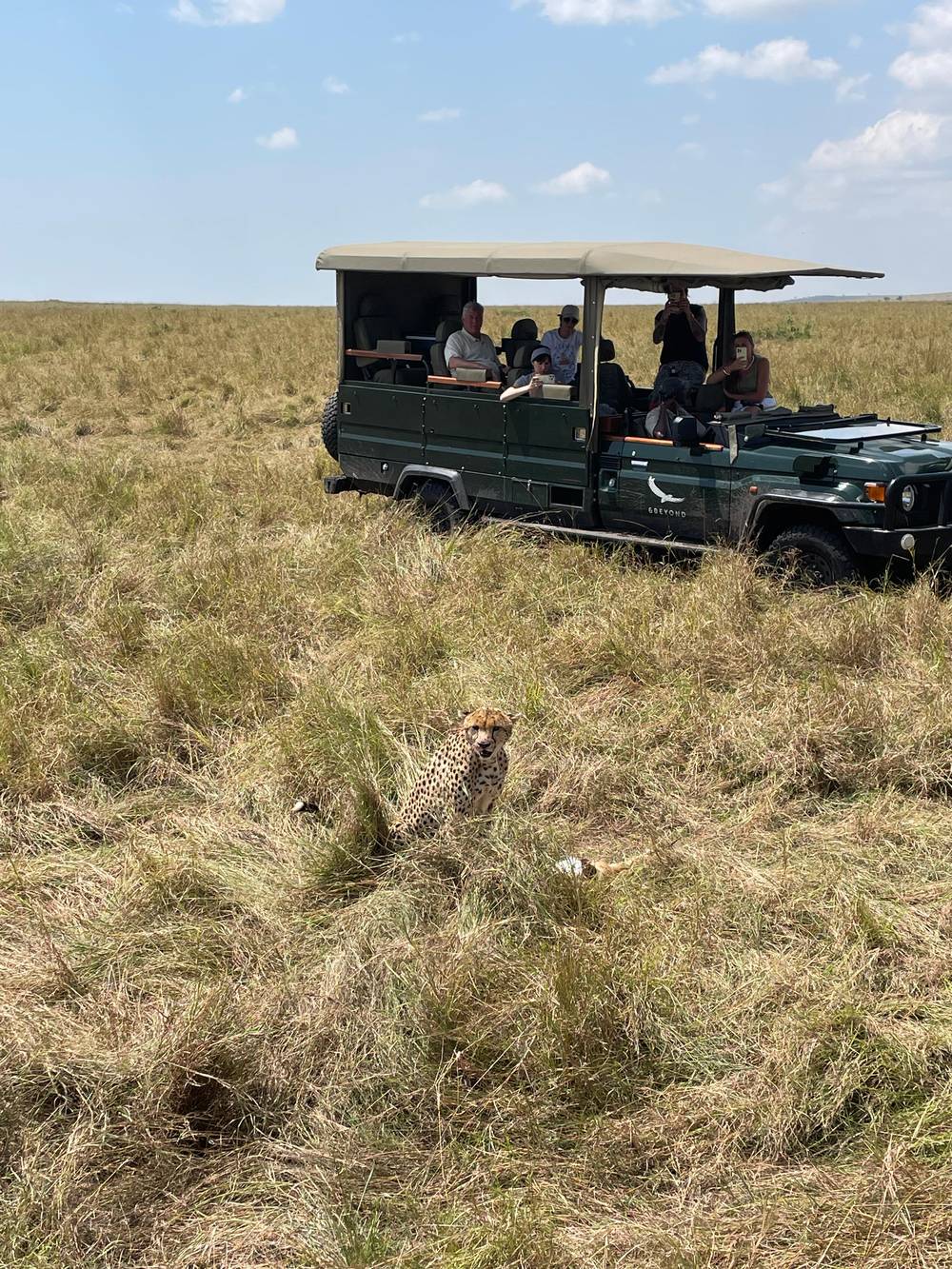
Africa Thrilling Safaris on YouTube · Nothing is fetched until you hit play.
The unique feature of Mara Triangle is the Oloololo Escapement, The Mara River and the International boundary which forms a triangular shape.
At the gate
The Mara River runs through the reserve and forms one of the Triangle's edges.9 It is where the herds cross in migration season, and hippos and crocodiles are found along it,36,37 so the rules forbid alighting from vehicles at river crossing points.30 On the far side lies Tanzania. The rules sheet says plainly not to cross the Tanzanian border, and the Conservancy says it has built a model for cross-border collaboration with the Serengeti National Park.30,38
The rules deserve a quick read, since they apply to every vehicle that enters. Drivers are held to 50 km/hr on graded roads and 30 km/hr on the rest, visitors keep more than 25 meters from animals and, once more than 5 vehicles queue at a sighting, viewing is cut to 10 minutes with the queue held 100 metres back.39,40,41 Nobody may sit or stand on a vehicle roof at any time.30
Breaking the rules has a price. Rangers may impose an on-the-spot fine of KES 10,000, have a vehicle or its passengers removed from the park or have them banned, and the rules expect everyone to be out of the park, or settled in a camp or lodge, by 7:00pm.31 A guide who follows the rules is a guide who keeps your day safe, so ask politely when the vehicle edges closer than you think it should. A good driver will agree.
FAQ
The Conservancy says it covers 510 km2, about one-third of the reserve.2
A non-resident adult pays $100 before July and $200 from July onward.4
Payment is by M-Pesa or credit card, and the fee page asks visitors to support cashless payment.16
A passport or national ID is needed, and a driver's licence does not count.21
An association counts 24 member conservancies covering about 450,000 acres.5
Sources
Planning a Maasai Mara safari? Ask a real person here.