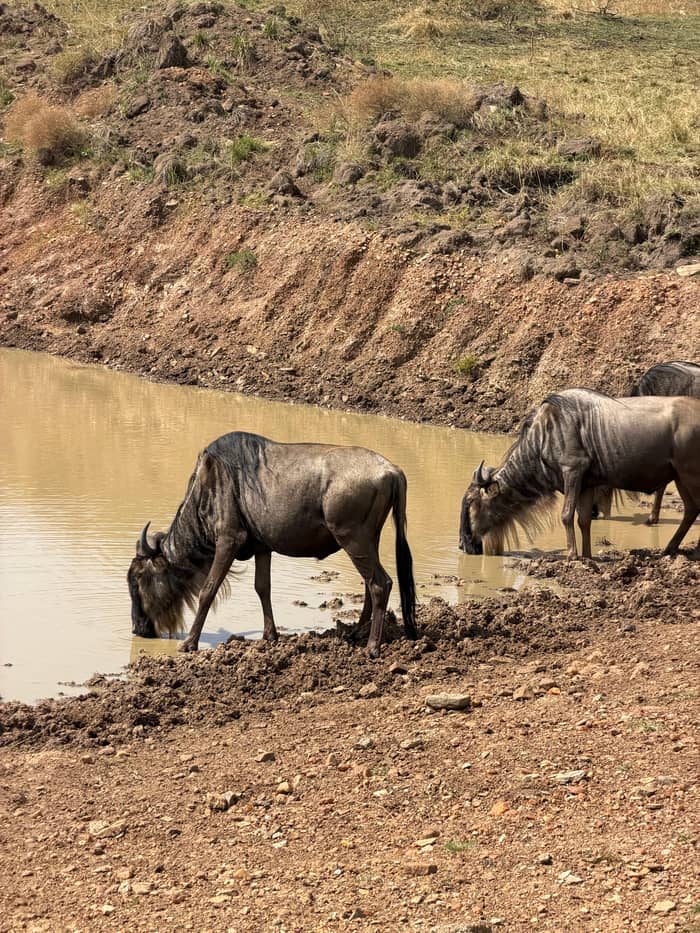
Site tour
The classic safari
Full day inside
- Length3 days, 2 nights
- Group7 to 8 people
- Pricefrom $199
Guides
Language
Currency
Find a date$199 and up · cancel at no chargeExplore the stops
In brief
The Masai Mara is a Kenyan reserve beside the Serengeti, known for its wildlife, its big cats and the Great Migration of wildebeest.
The Mara in brief
Browse 14 stops
Choose a route, then tap a pin or stop for its note and a Google Maps link.
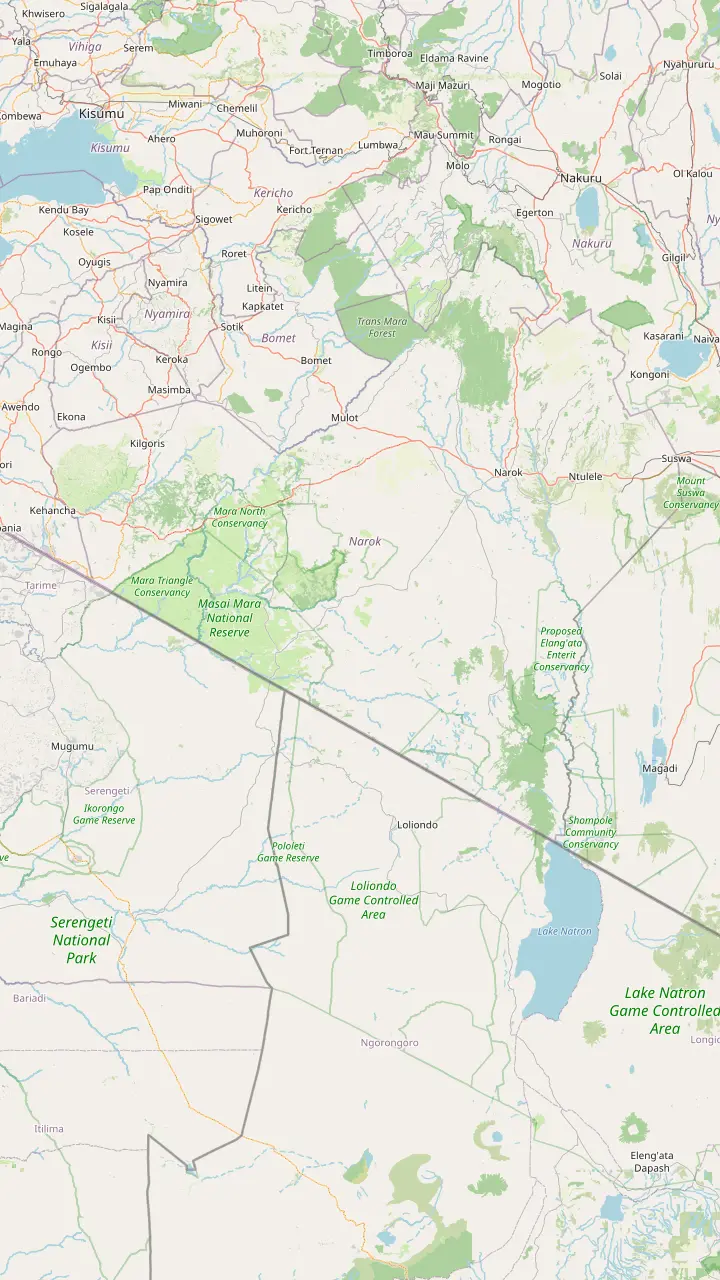
Kogatende lies in the northern Serengeti, where the herds gathered in early July 2025 before moving toward the Sand River.
Google MapsSand River is one of the traditional entry points for the migration herds, which gathered in the northern Serengeti before heading there in early July 2025.
Google MapsThe Mara River is one of the boundaries of the Mara Triangle, and the herds are described crossing to Look-Out Hill and down to the river.
Google MapsOloololo gate is on the Mara Triangle side, and the main road from there to Purungat Bridge gate takes a little over 1 hour at 50 km/hr.
Google MapsThe Loita Hills lie east of the reserve, and Pardamat Conservation Area is described as a migration route from the Loita plains to the Mara Triangle.
Google Maps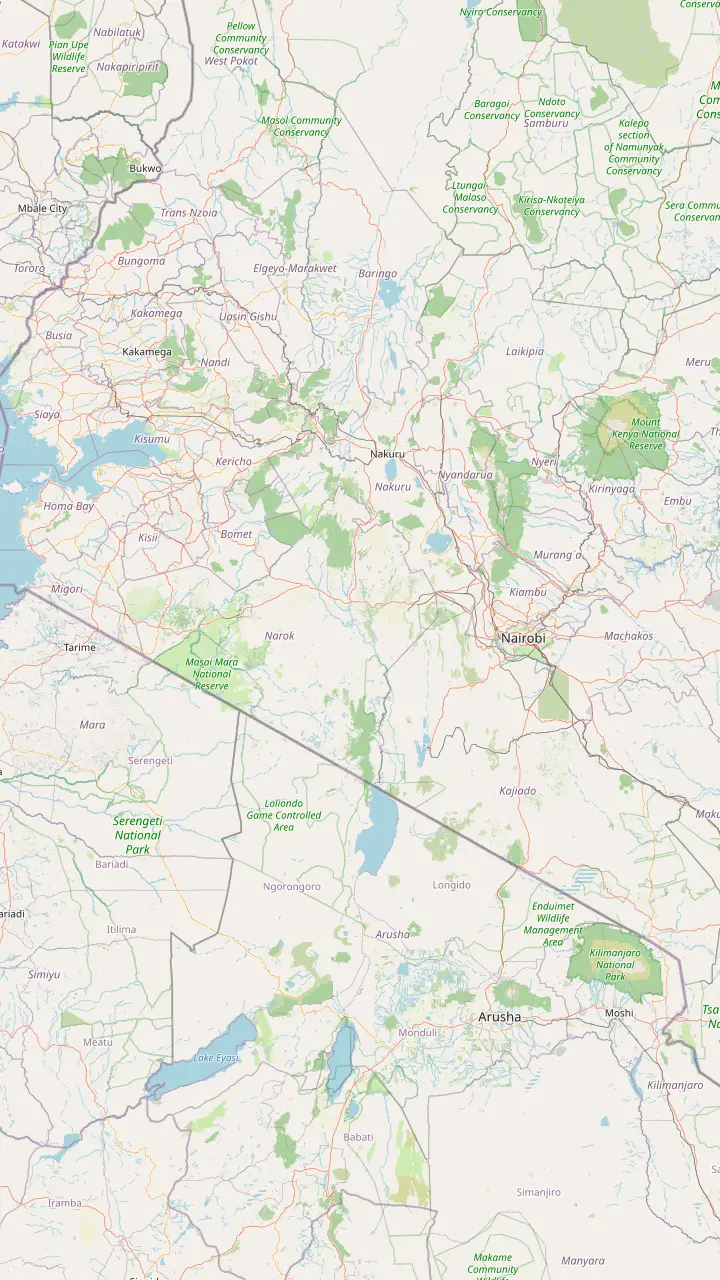
Nairobi is where the listed safaris begin, with free pickup at hotels in the city centre or Westlands, or at the City Market on Muindi Mbingu Street by 7:30 AM.
Google MapsNarok is the last big town on the way, and the Mara Conservancy says the road is tarmacked from Narok to Sekenani gate.
Google MapsSekenani is the route the Mara Conservancy calls fastest for a stay at Mara Serena, on the tarmac from Narok.
Google MapsMara Serena Safari Lodge and Little Governors Camp are the only accommodation inside the Mara Triangle, according to the Mara Conservancy.
Google Maps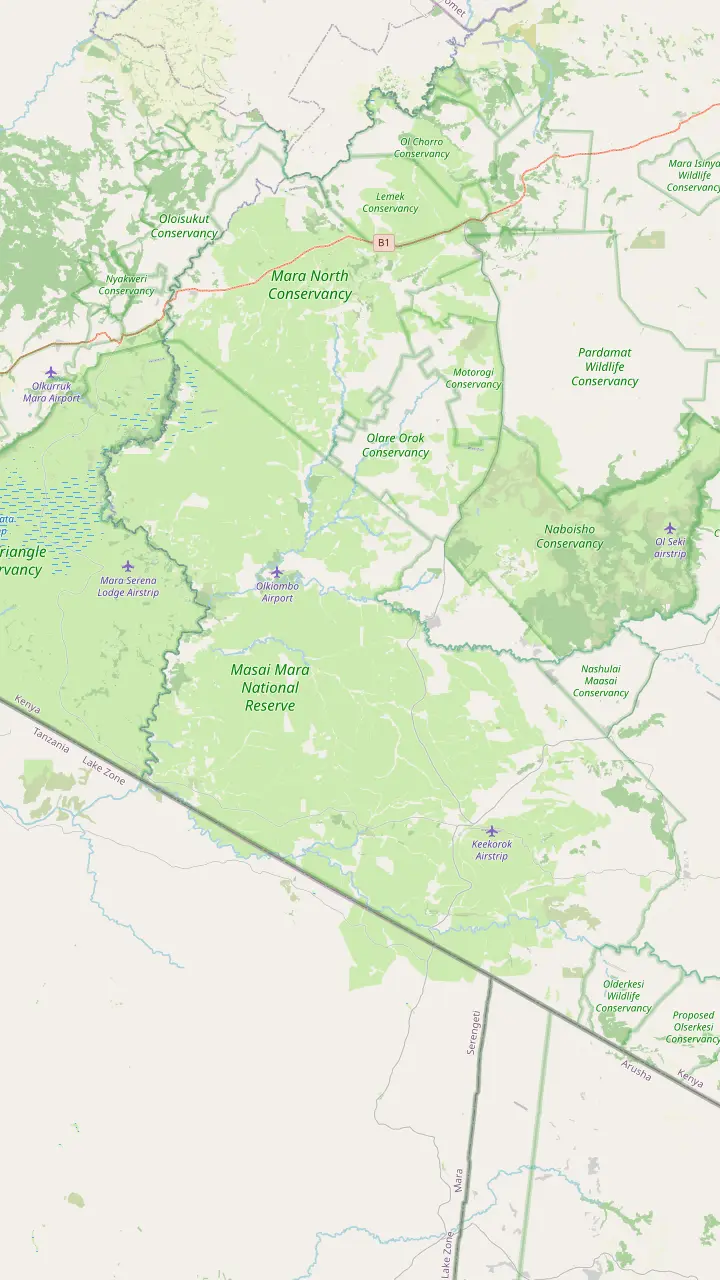
Oloololo gate is on the Mara Triangle side, and the main road from there to Purungat Bridge gate takes a little over 1 hour at 50 km/hr.
Google MapsMara Serena Safari Lodge and Little Governors Camp are the only accommodation inside the Mara Triangle, according to the Mara Conservancy.
Google MapsThe Mara River is one of the boundaries of the Mara Triangle, and the herds are described crossing to Look-Out Hill and down to the river.
Google MapsSekenani is the route the Mara Conservancy calls fastest for a stay at Mara Serena, on the tarmac from Narok.
Google MapsSand River is one of the traditional entry points for the migration herds, which gathered in the northern Serengeti before heading there in early July 2025.
Google MapsMapping data © OpenStreetMap contributors
The reserve, its place beside the Serengeti, the animals you can expect, the migration route with a map, and the rules that keep wildlife and visitors safe at a river crossing.
Editorial team, maasaimaratour.quest · Updated November 24, 2026 · Read in 9 min
Overview
What is the Masai Mara? It is a national reserve in southwestern Kenya, and the northern reach of the same grassland system that holds Tanzania's Serengeti. The Mara Conservancy records that in 1994 the reserve was divided, with Narok County Council taking the eastern half and Trans Mara County Council the north-western Mara Triangle.8 The councils later merged into the Narok County Government.9
The Triangle spans 510 km2, in the Conservancy's words about a third of the whole reserve.1 Its edges are the Mara River, the crest of the Oloololo escarpment and the Tanzania border,2 and none of them is fenced, as seasonal movement into the surrounding areas matters for the survival of the wildlife.10 That open edge is the key to the place: the animals move across it, and the reserve works as part of a much larger landscape.
Around the reserve sit the conservancies, which their association counts as 24 members across about 450,000 acres.11 Olderkesi, for example, lies at the south-east corner, just north of the Serengeti National Park, and Pardamat is described as a corridor between the Loita plains and the Mara Triangle.12,13 A Mara safari therefore crosses protected land of several kinds, each with its own rules and its own crowd.
Who lives where
| Animal | Where to look | What the sources say |
|---|---|---|
| Lion | Open grassland near herds20 | Marsh edges and thicker cover too20 |
| Cheetah | Open plains21 | Clear sightlines help it hunt21 |
| Buffalo | Among the most dependable sightings22 | Among the most dependable sightings22 |
| Hippo | Rivers and larger pools23 | Most reliably found in rivers and larger pools23 |
| Crocodile | The Mara River banks24 | Near crossing points24 |
| Black rhino | Hard to find25 | About 25 to 30 in the reserve26 |
| Wildebeest | Across the plains in season4 | 1,245,000 in the migration6 |
Habitat notes are from Governors Camp's guide to the animals of the Mara, and counts are from the Mara Conservancy.20,6
The Mara and the Serengeti are separate protected areas in two countries, joined by one ecosystem. The Frankfurt Zoological Society, which works in the Serengeti, describes it as one of the largest savanna systems in Africa that still functions as a whole,17 and the Mara Conservancy says it has developed a model for working with the Serengeti National Park across the border.18 The Tanzania border forms part of the Mara Triangle's boundary.2
For a visitor the practical difference is the side you pay and enter on. A Kenyan safari from Nairobi enters through Kenyan gates and uses Kenyan rules, and the Tanzanian side belongs to a different park authority with its own fees. The animals do not care, and for part of the year the herds are on one side and part of the year on the other, which is why the migration is the thing that links the two names.
The same society lists critically endangered black rhinos, lions, leopards, cheetahs, elephants and wild dogs among the Serengeti's residents,19 a list that overlaps heavily with the Mara's. That is why the question of which is better has no neat answer: the Mara is the Kenyan share of the same wildlife, with the Kenyan roads, camps and conservancies around it, and a short drive from Nairobi.
The herds
The Mara Conservancy puts the migration at 1,245,000 wildebeest, 500,000 Thomson gazelle, 200,000 Burchell zebra and 18,000 eland.6
The Conservancy reckons that a lucky visitor can view the whole big five inside an area under 2 km2 of the Triangle,3 which gives a sense of how dense the wildlife is. Luck is the operative word, and the rhino is the hardest of the five. By the Conservancy's account, the reserve is the only protected area in Kenya with an indigenous black rhino population, unaffected by translocations.25 That density is a good argument for spending a full day in the reserve and not only a morning.
The numbers tell the story. The Mara Conservancy says the reserve held approximately 120 black rhinos in 1971 and just 18 by 1984, after poaching,28 and that the reserve population still hovers around 25 to 30 animals.26 Elephants have suffered too: the Conservancy says 139 elephants were killed in 2012.29 Both figures are a reminder that your park fees and your choice of operator feed a real conservation effort.
Other animals are far easier. Governors Camp calls buffalo one of the surest large-animal sightings in the Mara, places hippos in the rivers and larger pools, and notes crocodiles along the Mara River, often near crossing points.22,23,24 Ask your guide where the day's reliable sightings are, and let the rhino be a bonus rather than the goal. The sightings that look rare on a brochure, such as a leopard in a tree, are the ones that reward a patient and well-informed guide.
Pick your focus
Tap an animal or an event and see where to look.
If Big herds on the plains
July to November
Herds turn up around June-July and remain until November.4
If A river crossing
Mara River, in season
Crossings are frequent but difficult to predict.5
If Lions and cheetahs
Open grassland and plains
If Hippos and crocodiles
The Mara River
If Fewer vehicles
A conservancy
Naboisho monitors how many tourists enter.27
If I want to see a rhino
Ask your guide
The reserve holds about 25 to 30 black rhinos.26
Where to see it
Site tour
Full day inside
Mara River
Hippos and crocodiles
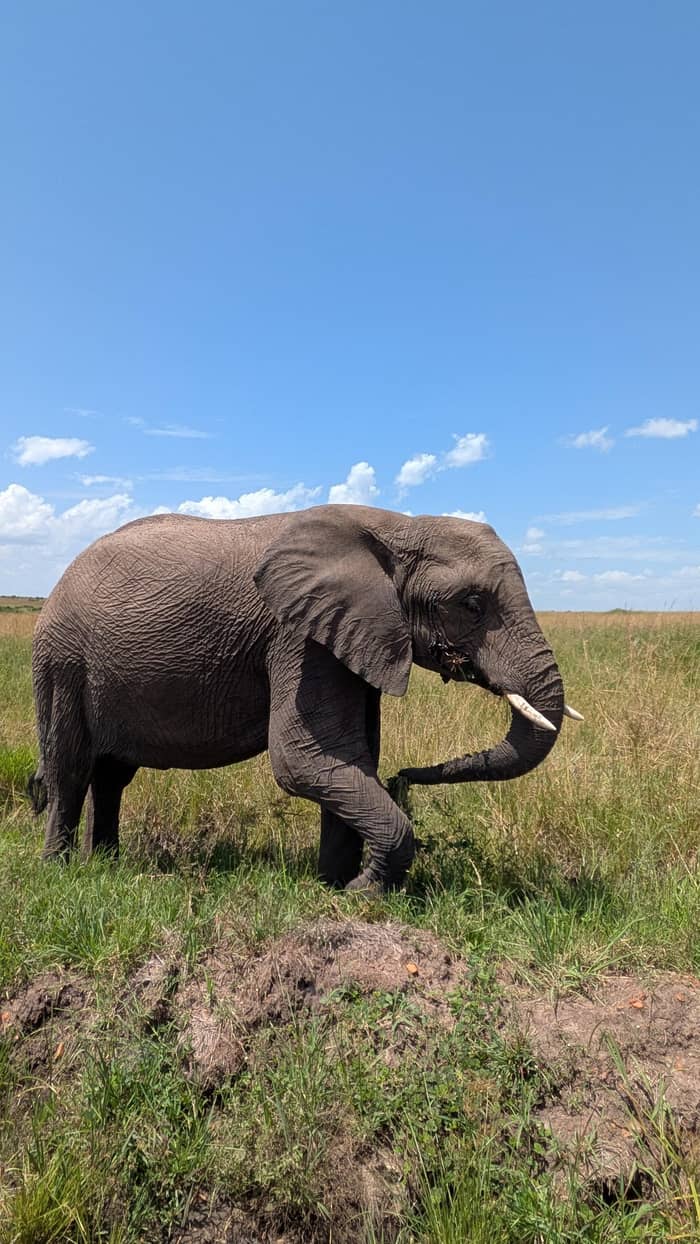
Quick look
A single day
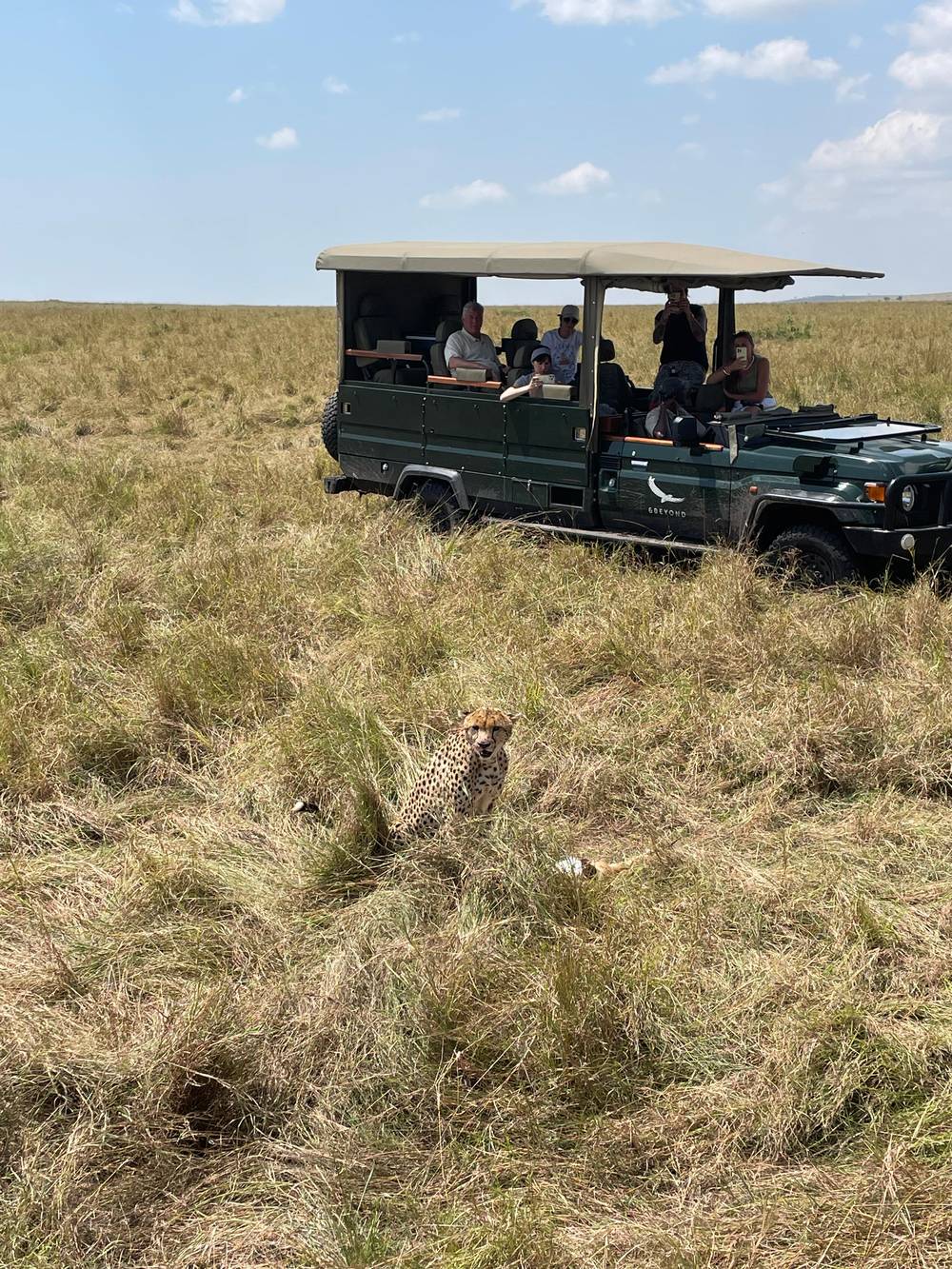
On a Maasai Mara wildlife safari the cats draw the crowds. Governors says lions turn up most often on open grass near herds, at marsh edges or in thicker cover, and that cheetahs favour open plains where long sightlines help them hunt.20,21 Learn those habitats and you can read the landscape yourself, spotting the likely places before your guide points them out. Knowing this shortens the search: scan open ground first, then the marsh edges, and let the guide confirm what the vehicle is looking at.
Some conservancies are known for their cats. Naboisho Conservancy counts more than 70 identified lions that treat it as their home range, and it keeps a close watch on visitor numbers so that fewer vehicles crowd in.37,27 That is a different kind of experience from the busy sectors of the reserve, with fewer vehicles at each sighting, and it is worth asking about if the cats are your priority. If you can choose, ask your operator whether the itinerary includes a conservancy day, since that choice changes the number of vehicles around you.
The rules around cats protect them and you. The Mara Triangle's rules sheet tells visitors to stay more than 25 metres from animals, and the Conservancy caps viewing at 10 minutes once more than 5 vehicles are queuing, with the queue held 100 metres back.38,35,36 A guide who obeys those limits may seem slow, but the limits keep the sighting calm and the animals relaxed. Treat the rules as one more part of the day instead of a hurdle, because a respectful distance is what keeps the cats hunting and resting normally.
The route
January to June
Governors has the wildebeest grazing in the Serengeti between January and June.14
Early July
In 2025 the herds massed here, then moved on to the Sand River.15
June to July
The Conservancy gives June-July as the usual start.4
July to September
Governors names July to September for crossings of the Mara River.16
To November
The Conservancy's season runs on to November.4
Think of the migration as a loop rather than an event, one that never really stops moving. Governors puts the herds at approximately 1.5 million wildebeest plus hundreds of thousands of other plains game, and says they follow the rains and the greener pastures between the Serengeti and the Mara.39 The Mara Conservancy counts 1,245,000 wildebeest, 200,000 zebra, 18,000 eland and 500,000 gazelle in the migration, filling the whole stretch of landscape.6 The two counts differ, and that is normal for a moving herd.
On the map above you can follow the route. From January to June, Governors says, the wildebeest graze in the Serengeti,14 and by early July 2025 the herds had massed in the north of the Serengeti and then moved on to the Sand River, a traditional entry point into the reserve.15 The Mara Conservancy describes the herds heading for Look-Out Hill and then dropping to the Mara River.34
The calendar is loose: the Mara Conservancy gives June-July as the usual start and November as the usual finish,4 and Governors names July to September as the best time to see the herds cross the Mara River.16 One more detail changes the picture: the Mara Conservancy says the resident Mara wildebeest have been in steady decline while the Serengeti migratory population has grown.40 Use the table and the map on this page to plan your own reading of the route, month by month and place by place, and do not treat any single date as a promise.
Video
Free High-Quality Documentaries on YouTube · Nothing is fetched until you hit play.
the true spectacle of the migration is 1,245,000 wildebeest, 200,000 Burchell's zebra, 18,000 eland and 500,000 Thomson's Gazelle filling the entire stretch of landscape
On the day
A river crossing is the scene everyone pictures, and it is the least predictable part of the year. According to the Mara Conservancy, crossings come often while the herds are in the Mara yet are hard to call in advance,5 and Governors adds that herds sometimes gather at the river and then move off without crossing.41 Sit with the herd, read the guide, and treat a quiet morning as part of the experience. For a traveller, it is the best reason to build a little slack into the plan and to tell the guide that a crossing is the priority.
Behaviour at the river matters. The Mara Conservancy asks visitors to stay inside the vehicle, keep quiet, keep back from the crossing point and never block the moving wildebeest.7 The reason is stark: it says wildebeest pushed by vehicles into unsuitable crossing places have died in their hundreds.42 A good operator knows this and keeps the vehicle back, even if that costs a better angle.
The river is also home to the animals that make a crossing dangerous. Governors reports crocodiles along the Mara River, mostly basking, lurking by crossing points or lying half-submerged.24 That is a reason to respect the guide's judgment and to stay inside the vehicle, as the rules say. If you want a crossing, allow several nights and a flexible plan, because the herds decide.
Masai Mara safari pictures start with patience and rules. You shoot from the vehicle, and the rules above shape the angle: stay inside at a crossing, wait 100 metres away when more than 5 vehicles are queuing and expect a 10-minute viewing limit at busy sightings.7,36,35 A pop-up roof and a window seat help, and listings for group safaris often mention the pop-up roof, so check before you book. The window seat and the pop-up roof matter more than the lens you carry, because they decide whether you can see over the grass at all.
Think about subjects as well as lenses. A wide lens captures a herd, a medium zoom handles most cats and a longer one helps with birds. The Ol Kinyei Conservancy says it holds over 300 species of birds,43 and Governors adds that migratory species are in the Mara from November to April,44 so a bird photographer has a case for a quieter month. Some operators carry bean bags or window mounts for long lenses, and it is worth asking in advance rather than balancing a camera on your knees.
Do not trade the experience for the frame. Good photographs depend on guides who know where animals will be and who place the vehicle with care, not on vehicles that crowd a sighting. Take a few frames, then lower the camera and watch. Charge your batteries the night before, carry a spare card and keep a lens cloth for the dust. Add a few frames of the landscape and the camp, since those are the pictures that bring the whole journey back when you scroll through them later.
FAQ
The Conservancy says a lucky visitor can see the whole big five inside 2 km2 of the Triangle.3
The Mara Conservancy gives June-July as the usual start and November as the finish.4
The Mara Conservancy asks visitors to stay inside the vehicle and not to block the moving wildebeest.7
Sources
Planning a Maasai Mara safari? Ask a real person here.