First layer
On the road
From Nairobi to the gate
See the safariGuides
Language
Currency
Find a date$199 and up · cancel at no chargeChecklist to tick off
In brief
Is Masai Mara safe? It carries real risks on the road, around wildlife and for health, and official advice is to use a reputable operator and follow the park rules.
Safety essentials
Checklist · 10 points
Tap to check items off; your progress is remembered on this device.
0 / 10 ready
You are all set. Only your date and your pickup hotel in Nairobi are left to choose.
Reserve a spotRoads, wildlife, the night in camp, health and crime on a Mara safari from Nairobi, explained from government travel advice, the reserve rules and health authorities.
Editorial team, maasaimaratour.quest · Updated November 24, 2026 · Read in 7 min
Overview
Is it safe to travel to Masai Mara? The honest answer is that a safari is an ordinary trip with a few real risks, and no official source promises otherwise. The UK government's travel advice names areas where it advises against all travel, along the Kenya-Somalia border and the northern east coast, and the list centers on Mandera, Wajir, Garissa and Lamu counties.2 The Mara is not on that list, though the advice still warns that no travel can be guaranteed safe.1
The same advice says there is a heightened threat of terrorism across Kenya, and that attacks could occur in places visited by tourists, safari parks among them.8 It also reports frequent violent crime, including mugging, armed robbery and carjacking, particularly in the large cities and on major highways.9 Those warnings are about risk, not about the likelihood of a problem on your own trip, and they are the reason to travel with a company that knows the roads.
It helps to treat the risks as layers. The first layer is the road from Nairobi, the second is the wildlife, the third is the camp and the fourth is your health. Each has its own precautions, and none of them calls for fear. What follows takes the layers one at a time and closes with the entry rules and insurance. Read the live government page before you go, because advice changes between the day you book and the day you fly.
Risks at a glance
| Risk | What the source says | What you do |
|---|---|---|
| Roads | Driving standards are often poor14 | Travel with a guided safari |
| Crime | Violent crime on major highways9 | Stay in the vehicle, windows closed |
| Terrorism | A heightened threat across Kenya8 | Check the live advice before you go |
| Wildlife | Risks at close range20 | Never leave the vehicle at a crossing |
| Malaria | Medicine recommended for game parks5,6 | See a travel clinic |
| Evacuation | Up to $5,000 for non-members21 | Carry insurance or join AMREF |
Rows are what the UK government, the CDC and the Mara Triangle managers state; this is a summary, not a promise of safety.14,9,21
The road is where the UK advice is most specific. The UK advice says driving standards in Kenya are often poor,14 and it recommends driving with windows closed and doors locked, considering convoys in remote areas and avoiding driving at night.10 A guided group safari can follow that advice: the operator's own driver does the driving and the plan is built around reaching camp by evening, though it is worth asking how the operator handles the road.
Nairobi itself is the other hazard. Protests, demonstrations and strikes are common in Kenya, particularly in Nairobi, and they often cause traffic disruption.15 That is a practical reason to leave a margin before the pickup and after the drop-off, and not to plan a flight on the evening of the day the safari ends. Collection on the safari sold here starts at 8:00 AM at central Nairobi and Westlands hotels.
Expect the surface to be rough in places. A recent traveler on the safari sold here calls the road from Nairobi rough, and the managers of the Triangle describe the stretch from Narok to Sekenani gate as tarmacked.16 A comfortable seat, a cushion and a stomach remedy are better than bravado. If you do not like long drives, a short flight is the alternative, since several airlines fly scheduled services to the Mara.17
The rules in numbers
Figures from the Mara Triangle rules: the limit of vehicles at a sighting, the viewing cap, the distance from animals, the two speed limits and the distance at which waiting vehicles stay.18,12,19
How safe is a Masai Mara safari with big predators around? That depends mostly on how people behave, and the rules exist for that reason. The UK advice says there are risks in viewing wildlife, particularly on foot or at close range.20 The reserve rules answer that: never sit or stand on a vehicle roof, never get out at river crossing points and never harass or follow animals.4,12
The distances and speeds are written into the rules: 25 meters is the minimum gap to animals, and cars may do no more than 50 km/hr on graded roads or 30 km/hr on other tracks.12,19 A crowd at a sighting is managed too: more than 5 vehicles means 10 minutes of viewing and a waiting line 100 metres back.18 Rangers may fine rule-breakers KES 10,000 on the spot.13
Keep your own habits in line. Do not lean out of the open roof for a photo with an animal nearby, do not shout or clap, and do not feed or touch anything. Swimming in rivers and lakes is illegal in national parks and best avoided elsewhere because of the dangers from wildlife and waterborne diseases.20 A guide who tells you to sit down and be quiet is doing the job you hired them for, and the right answer is to do it.
Match your worry
Say what worries you and see the precaution to start with.
If I worry about the road
Daylight and a guided trip
The advice is not to drive after dark, and a guided trip can be planned around daylight.10
If I worry about the animals
Stay in the vehicle
The rules ban sitting or standing on the roof.4
If I worry about illness
See a travel clinic
If I worry about the cost of an accident
Check your cover
Evacuation can cost up to $5,000 for non-members.21
If I worry about crime in Nairobi
Keep valuables out of sight
The advice reports bag-snatching in busy places.9
Layers of safety
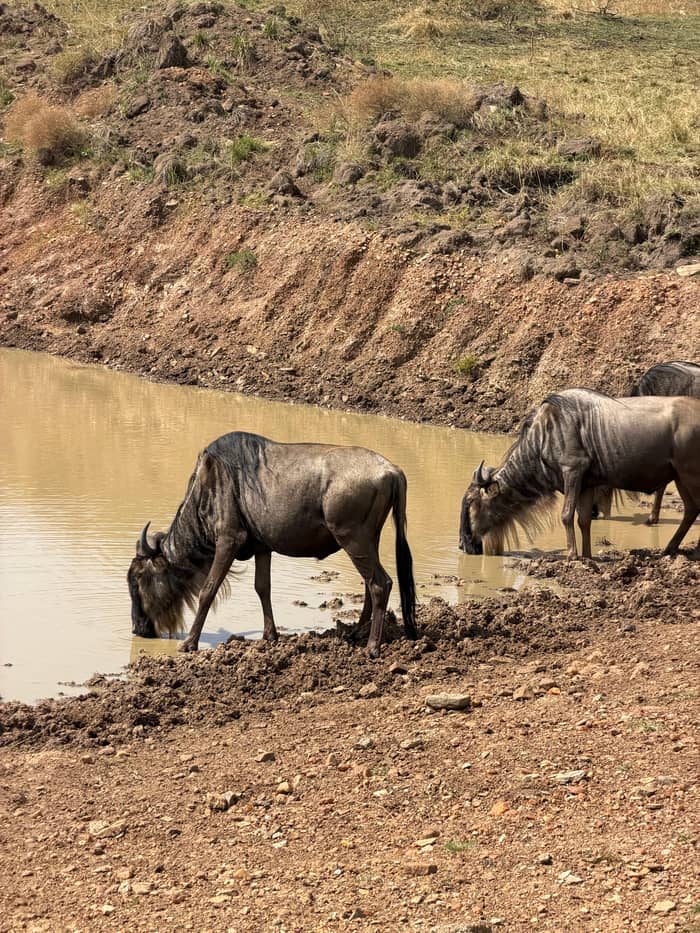
First layer
From Nairobi to the gate
See the safari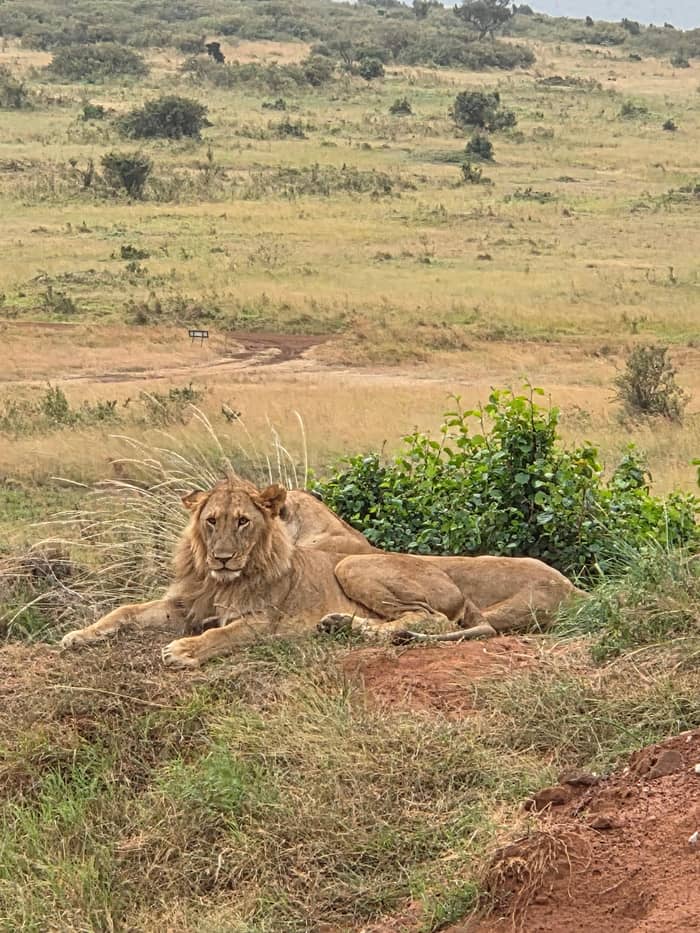
Second layer
Inside the reserve
See the safari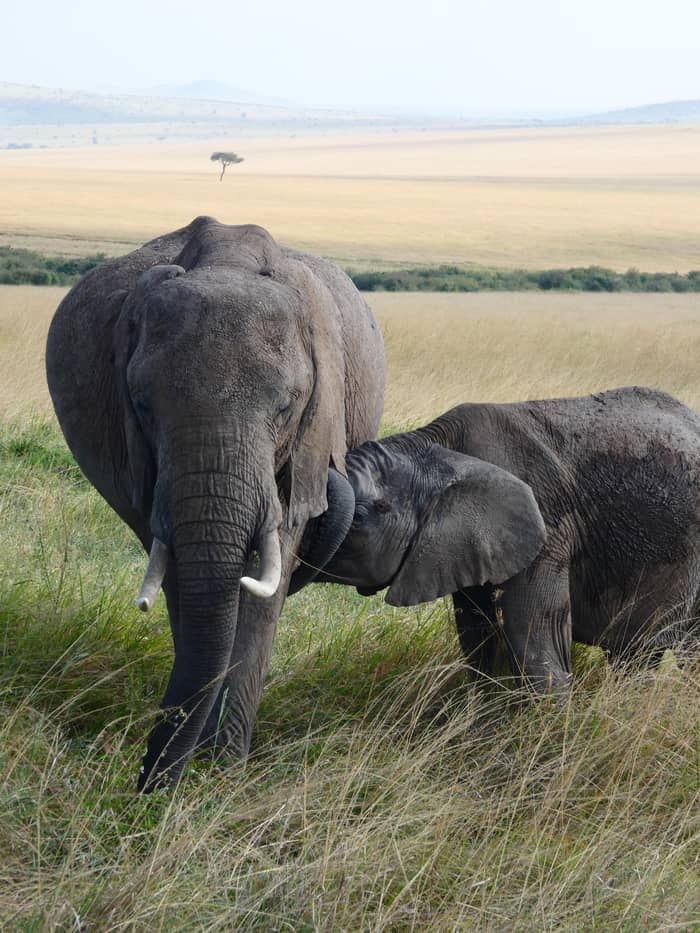
Third layer
Before and during
See the safariThe camp is a place of rest, and the reserve rules shape the evening. Visitors are expected to be out of the park, or back at their camp or lodge, by 7:00pm, the same hour at which the Triangle shuts its gates at 19:00.13,26 The tents of the safari sold here are big, private and self-contained, with their own toilet, shower and bed, so you do not need to walk to a shared block at night.
Boundaries in the Mara are open. The Conservancy says none of the Mara Triangle's boundaries is fenced, because the seasonal movement of wildlife is crucial to its survival.27 So animals can pass near a camp at night, and follow your camp's own instructions about walking after dark. Keep a torch by your bed, zip the tent properly and never leave food in it. These are habits, not a warning that something is wrong.
Help is within reach in an emergency. The operator of the safari sold here keeps its phone number open 24 hours on WhatsApp, and the Triangle lists clinics at Angama Mara Lodge, Kichwa Tembo Camp and Mara Serena Lodge.28 For serious cases, flying doctors can evacuate a patient, and the Triangle warns the bill can reach $5,000 for someone who is not a member, so it advises joining AMREF.21
Price your party
Add your party size to compare 3 guided departures.
Choose from 3 options
Add your party size to compare 3 guided departures.
≈
View≈
View≈
ViewConverted at the ECB reference rate, from-prices as listed by GetYourGuide. The precise amount is shown when you book.
A careful day
At pickup
Pickup is from 8:00 AM, with a 24-hour number to call.
On the road
Arrive in daylight and skip night driving, as the advice says.10
At the gate
A passport or national ID is asked for when you pay.11
On a game drive
Never sit or stand on the roof, and keep more than 25 meters away.4,12
By evening
Back in camp before dark, by 7:00pm at the latest.13
In the tent
Tents are private and self-contained, with a shower and bed.
Health is the area where preparation matters most. The CDC, the American public health agency, advises prescription medicine against malaria for travelers heading to certain parts of Kenya to prevent malaria, and it lists malaria transmission in all areas, game parks included, below an elevation of 2,500 m.5,6 It also recommends the yellow fever vaccine for all travelers of 9 months and older, with exceptions such as travel limited to Nairobi.24 See a travel clinic well before you fly.
Medical cover is also an entry matter. FCDO advice states that from 5 October 2026 most travelers visiting Kenya for less than 12 months must have Kenyan government travel health insurance, which is valid for 90 days and which foreign policies do not replace.7,29 The same advice says to apply online for an eTA in advance, and the eTA portal says applications are generally processed within 72 hours.23,30 Keep your own travel insurance for evacuation and trip cover too, because the UK advice warns that insurance can lapse if you travel against its recommendations.25
There is also a dated public health note. The UK Foreign Office health page said that on 6 October 2026 the Kenyan Ministry of Health confirmed its first imported case of Ebola and that contact tracing, surveillance and border screening were being applied.31 That is the position on the page when we read it, so check the current UK, CDC and Kenyan Ministry of Health pages for updates before you travel. In Kenya the emergency number for an ambulance is 999.22 Carry any medicine in its original packaging, with a copy of the prescription.
Video
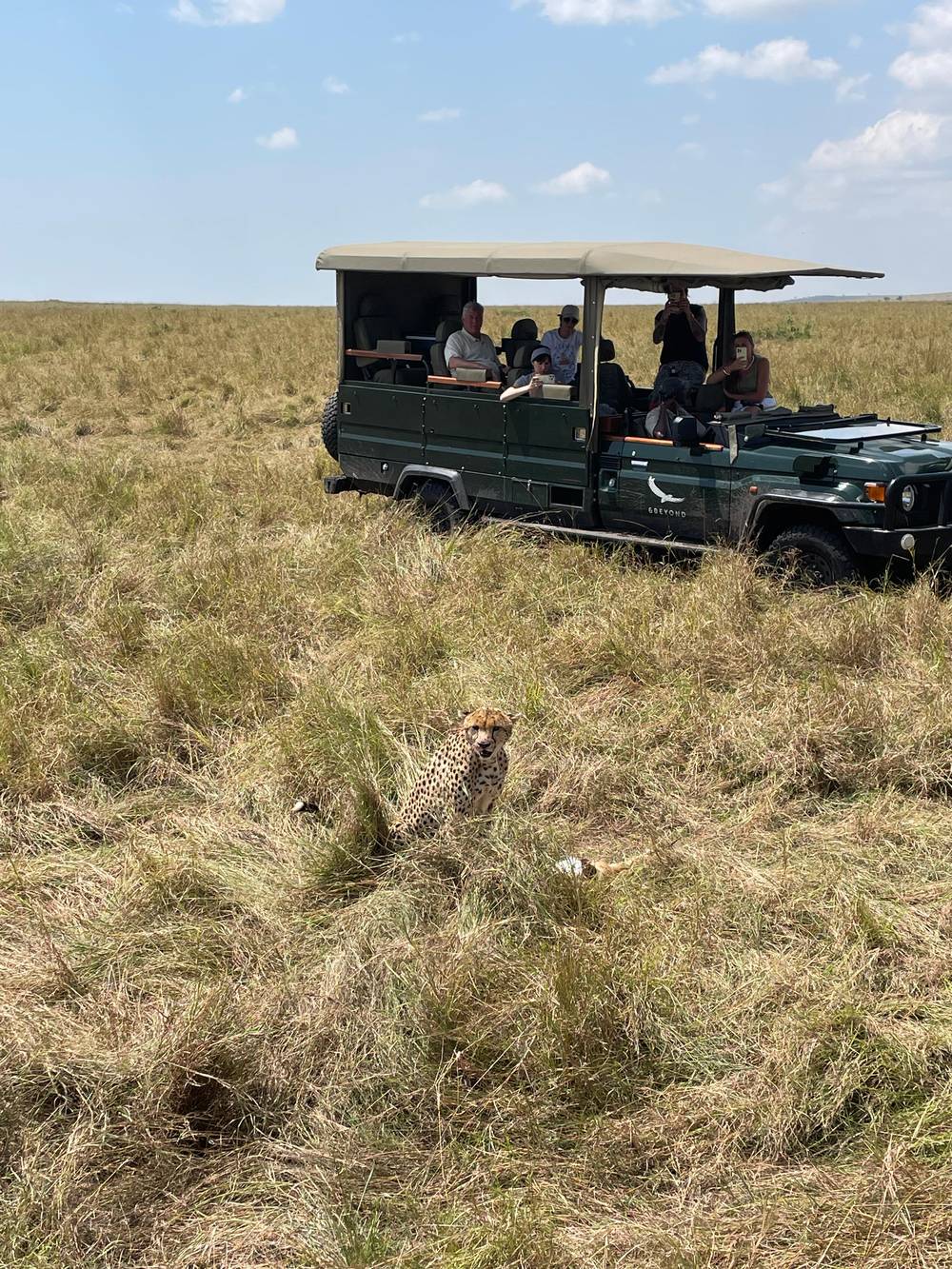
Kenya Wild Parks on YouTube · Nothing is fetched until you hit play.
There are risks associated with viewing wildlife, particularly on foot or at close range.
The UK advice places most of its crime warnings on cities, highways and transport hubs. The UK advice says bag-snatching is common in bus stations, railway stations and airports,32 warns of thieves posing as police officers or private security guards33 and says to avoid walking alone in isolated areas, even in daylight.34 The answer is ordinary caution: leave valuables in the hotel safe and carry only what you need. The Kenya Tourism Federation Safety and Communication Center provides tourist advice and emergency help.35
Some laws catch visitors by surprise. It is illegal to take photographs of official buildings, embassies and airports,36 and illegal to import or export a drone without prior approval from the Kenya Civil Aviation Authority.37 It is illegal to buy, sell, kill or capture a protected wild animal or trade in its parts without a licence, so leave ivory and horn souvenirs alone.38 Check the rules before you pack a camera drone.
A last point about operators. The government advice is to use reputable tour operators, to arrive at your destination in daylight and not to buy safari tours from touts.3 A listing with live reviews, a stated cancellation window and a phone line that answers is a sensible filter. On the safari sold here you can cancel for free until 24 hours before the start, and the operator number is open round the clock. That is what an accountable operator looks like on paper.
FAQ
The UK advice says no travel can be guaranteed safe, and it names areas to avoid that do not include the Mara.2
The UK advice says attacks could occur in places visited by tourists, safari parks among them.8
The reserve rules say never to alight at river crossing points or to sit on the roof.4
The UK health page gives 999, and the operator of the safari sold here keeps a 24-hour WhatsApp line.22
Sources
Planning a Maasai Mara safari? Ask a real person here.